
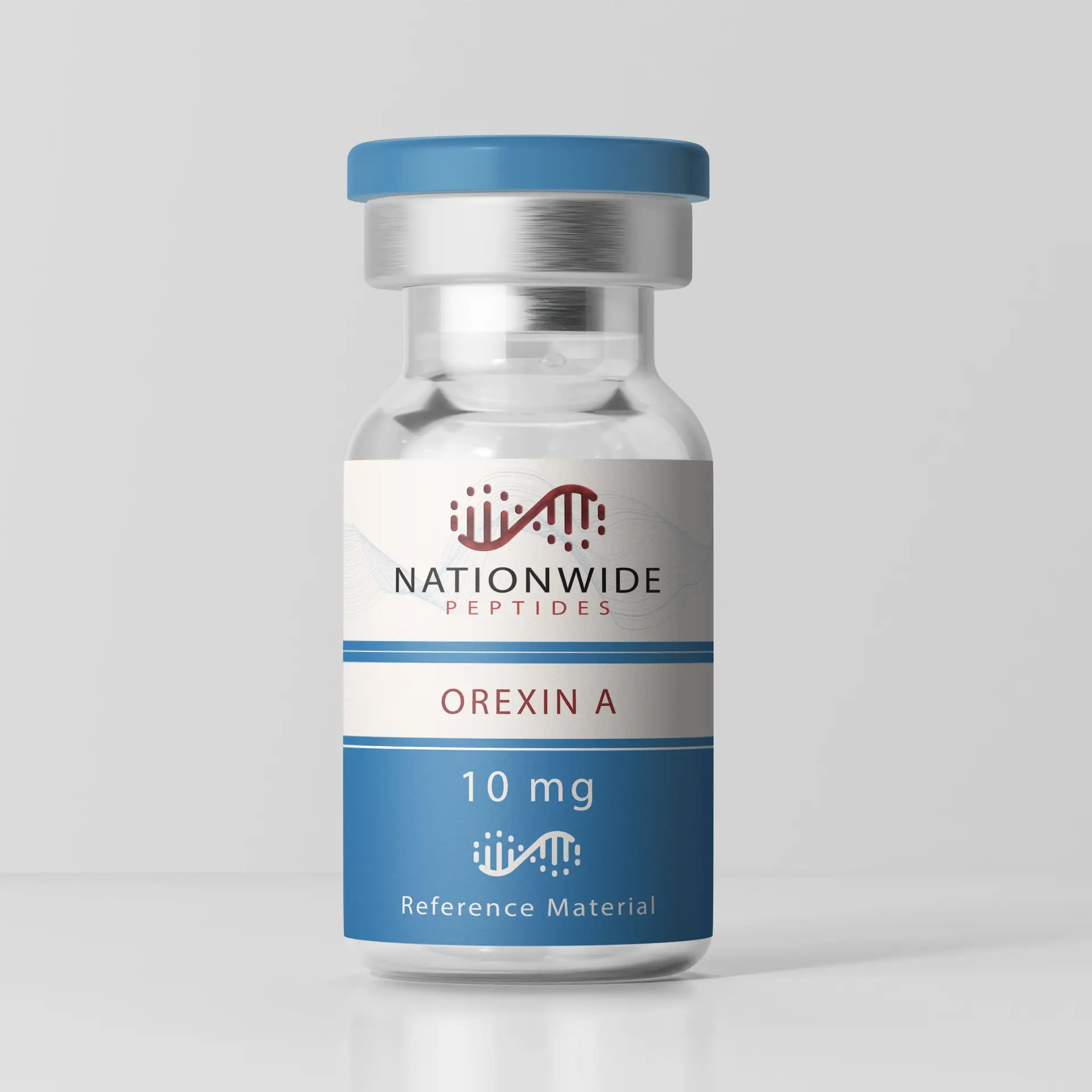
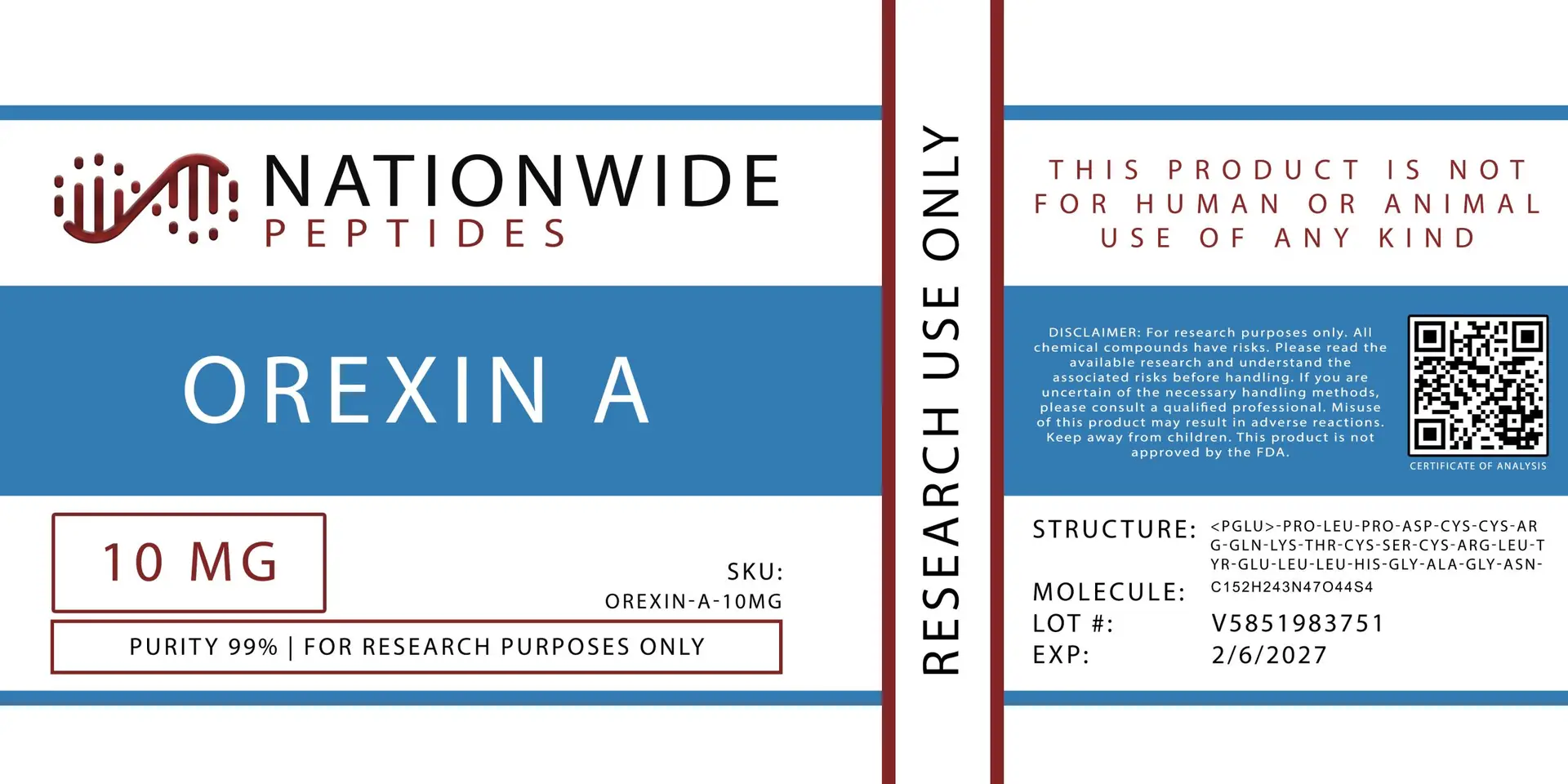





For Research Use Only. Not for Human Use.
About the Peptide
Orexin A is a synthetic form of the endogenous hypothalamic neuropeptide and is extensively used in preclinical research to investigate orexin receptor (OX1R and OX2R) activation, arousal circuit modulation, feeding behavior pathways, and stress response dynamics. This research-grade peptide is produced under stringent GMP-compliant conditions and provided as a lyophilized powder to ensure superior purity, stability, and reliability in experimental applications.
Engineered solely for preclinical investigations, each batch of Orexin A undergoes a comprehensive quality assessment and includes complete documentation, including a Certificate of Analysis (COA), purity data, and structural verification.
Scientific Overview
Orexin A acts as a potent excitatory neuropeptide that binds with high affinity to OX1R and OX2R receptors, influencing key physiological processes in research settings. As noted by guidetopharmacology.org, orexin-A is an endogenous peptide in human, mouse, and rat. Preclinical investigations demonstrate Orexin A’s potential effects in the following areas:
- Promotion of wakefulness and suppression of sleep states in rodent models
- Modulation of arousal circuits via projections to locus coeruleus and other brainstem nuclei
- Regulation of feeding behavior pathways in preclinical studies
- Influence on stress adaptation and autonomic responses
- Support for studies on reward and motivation mechanisms in behavioral models
Why Researchers Choose Our Orexin A
For laboratories requiring dependable Orexin A research peptide, our manufacturing process prioritizes reproducibility and scientific precision. Every batch is confirmed for:
- Purity and structural identity
- Consistent performance across research experiments
- Rigorous production controls and full documentation
- Accessible pricing within the research community
Research-Referenced Functional Attributes
(Based on existing preclinical and literature data—not intended as claims of therapeutic use)
- Activation of orexin receptors to enhance neuronal firing in arousal-promoting nuclei like the locus coeruleus
- Maintenance of wakefulness and reduction in sleep transitions in acute administration models
- Modulation of autonomic and neuroendocrine responses during stress challenges
- Support for investigations into hypothalamic projection pathways via preclinical models
- Potential influence on behavioral adaptation in reward and motivation paradigms
- Examination of excitatory effects on downstream systems regulating vigilance and homeostasis